





|  Forrige |

Appendix
Appendix 1: Mandate for the national work with Open Access
Background and objective
The government has – via the Minister for Science, Technology and Innovation – approved the Council of the European Union’ conclusions on scientific information in the digital age. With the objective of meeting the government’s obligations the implementation of the conclusions is anchored in a project group with basis in the Steering Committee for Denmark’s Electronic Research Library (DEFF). The Steering Committee works to further DEFF’s objectives and interests. The members are appointed in their personal capacity and do not consider institutional specific interests, neither do they represent specific organisations. The Steering Committee’s area of responsibility includes i.a. the preparation of a strategy and comprehensive action plans. The Steering Committee is placed organisationally under the Coordination Committee which handles the overall management of DEFF.
The work with implementation of the Council of the European Union’ conclusions takes place in connection with the Steering Committee’s ordinary meetings and is handled by a project group based on the Steering Committee supplemented by representatives from The Danish University and Property Agency, The Danish Agency for Research and Innovation, Danish Universities and the Committee for the Protection of Scientific work.
The Council of the European Union’ conclusions in the main encourage Denmark:
- to strengthen national strategies and structures for access to and dissemination of scientific information
- to strengthen coordination between the member states of policies and practice concerning access and dissemination
- to ensure long-term preservation of scientific information, including publications and data as well as paying due regard to scientific information in national preservation strategies
The purpose of the new committee is to ensure that the work is implemented by a competent forum, and that the initiatives launched are coordinated with the relevant stakeholders.
Mandate
The project group’s task is to plan and carry out the implementation of the Council of Minister’s conclusions. In the planning of the implementation the committee is urged to clarify how publicly funded research can be made publicly available online and also which economic consequences are associated with this. The plan may contain deliberations as to how the implementation can secure support from Danish researchers, as well as what kind of role the research-funded bodies should have in connection with the implementation. The plan must take into account the clarification of copyright issues. Inclusion of the scientific publishers’ organisation in Europe is important in connection with dissemination of research results.
The project group prepares an approach on behalf of the Minister for Science, Technology and Innovation and the Minister for Culture to the EU Commissioner for Research and Innovation as well as the EU Commissioner for the Information Society and the Media, who are behind the Council of the European Union’ recommendations with the request that the commissioners prepare a common European proposition to the publishing companies concerning Open Access publishing.
Secretariat
The project group is serviced by the DEFF secretariat. The costs in connection with the secretarial service are expected to be covered within the existing frame.
Time schedule and products
The project is asked to be in charge of the implementation of the Council of the European Union’ conclusions.
Tentative time schedule
| Date | Activity |
| 1. Feb.-1. Apr. 2009 | Appointment of project group on the basis of DEFF’s steering committee |
|
1. Apr. 2009
|
Forwarding of the Minister for Science, Technology and Innovation and the Minister for Culture’s letter to the EU commissioners |
| 1. Apr.-1. Sept. 2009 | Preparation of plan for implementation and economy |
| 1. Sep.-1. Nov. 2009 | The project group presents the plan to the Coordination Committee |
| 1. Nov.-1. Feb. 2010 | The implementation plan is heard in the ministries involved and the economic issues are clarified |
| 1. Feb.-1. Apr. 2010 | The project group works out a broad hearing of the plan |
| 1. Apr.-31. Jun. 2010 | Consultation phase |
| 1. Jul.-1. Sep. 2010 | The project group concludes on the consultation |
| 1. Sep.-1. Nov. 2010 | The relevant ministers approve the implementation plan |
| 1. Nov. 2010 | Implementation of Open Access is put into motion |
|
Ult. 2011 |
The project concludes on the implementation process and informs the ministers |
Appendix 2: Council of the European Union’s conclusions on scientific information in the digital age
Council of the European Union
Council Conclusions on scientific information in the digital age: access, dissemination and preservation
2832nd competitiveness (Internal market, Industry and Research) Council meeting Brussels, 22 and 23 November 2007
The Council adopted the following conclusions:
"The Council of the European Union
recalling:
- the 24 August 2006 Commission Recommendation on "the digitisation and online accessibility of cultural material and digital preservation" (OJ 2006/L 236/28) and the related Council Conclusions of 13 November 2006 (OJ 2006/C 297/01);
- the 14 February 2007 Commission Communication on "scientific information in the digital age: access, dissemination and preservation" COM(2007)56;
- the 4 April 2007 Commission Green paper on "the European Research Area: New Perspectives" COM(2007)161;
- The OECD's Principles and Guidelines for Access to Research Data from Public Funding, agreed by all OECD Countries in 2007.
Considering that:
- access to and dissemination of scientific information - publications and data - are crusial for the development of the European Research Area, and can help accelerate innovation;
- the Internet has created unprecedented possibilities to disseminate, share and build on the outcome of research efforts;
- Information and Communication Technologies revolutionise the way scientists communicate, perform research and produce knowledge;
- in an era of high speed connectivity and high performance computing, data emerges as key for modern science;
- the systems by which scientific information is published are pivotal for its dissemination and quality control, in particular through peer review, and thus have a major impact on research funding policies and on the excellence of European research;
- universities, libraries, research performing and research funding organisations, scientific publishers and other stakeholders have in recent years made considerable investments in information technologies for online accessibility;
- effective and long-lasting digital preservation of scientific information is fundamental for the current and future development of European research;
1) Welcomes
– the Communication COM(2007)56 on "scientific information in the digital age: access, dissemination and preservation" as a basis for further work at the European level on the accessibility and preservation of scientific information.
2) Recognises
– the major contribution of universities, international research organisations, research bodies, libraries and other public organisations, as well as of scientific publishers, to the scientific dissemination process;
- that new, Internet-based dissemination models have triggered a major debate involving all concerned stakeholders on access to and dissemination of scientific information and in particular on access to peer-reviewed scientific articles;
- that over the past years scientific libraries' capacity to provide researchers with access to a wide range of publications has been affected by rising overall prices of scientific journals (including electronic distribution of publications);
- the strategic importance for Europe’s scientific development of current initiatives to develop sustainable models for open access to scientific information.
3) Underlines
- the need to ensure rapid and wide access to publicly funded research results;
- that Member States have a strong interest in an efficient scientific information system that maximises the socio-economic impact of public investments in research and technological development;
- the importance of scientific output resulting from publicly funded research being available on the Internet at no cost to the reader under economically viable circumstances, including delayed open access;
- the cross-border nature of many research endeavours, of their funding sources, and of their dissemination channels;
- the importance of better access to unprocessed data and repository resources for data and material that allows fresh analysis and utilisation beyond what the originator of the data had envisaged;
- that new forms of electronic communication have the potential to enable open access to data and scientific publications, and provide a unique opportunity for the open development of specific data mining, analysis and integration tools, possibly enhanced by common format standards;
- that policies and practices in the Member States on access to and preservation of scientific publications and research data are developing at different speeds;
- the importance of effective collaboration between different actors, including funding agencies, researchers, research institutions and scientific publishers, in relation to access, dissemination and preservation of scientific publications and research data;
4) Takes note
- of recent reports calling on the Commission to improve access to results stemming from the research it funds, including reports of the European Research Advisory Board and the European Research Council's Scientific Council supporting open access to Community funded research results;
- of the intention of the Commission to support further research on the scientific publication system, and to carry out a study on the economic aspects of digital preservation.
5) Invites the member states
As first steps and in line with the annex, to
- reinforce national strategies and structures for access to and preservation and dissemination of scientific information, tackling organisational, legal, technical and financial issues;
- enhance the co-ordination between Member States, large research institutions and funding bodies on access, preservation and dissemination policies and practices;
- maximise access for researchers and students to scientific publications, in particular by improving public procurement practices in relation to scientific information; this could include exchanging information on these practices and increasing the transparency of the contractual terms of "big deals", and exploring the possibilities for funding bodies, research institutions and scientific publishers from different Member States to work together in order to achieve economies of scale and efficient use of public funds by demand aggregation;
- ensure the long term preservation of scientific information - including publications and data - and pay due attention to scientific information in national information preservation strategies;
6) Invites the commission to
As first steps and in line with the annex, to
– monitor good practices in relation to open access to European scientific production, including those arising from large scale experiments by scientific communities and large research institutions, and encourage the development of new models that could improve access to European scientific research results;
- monitor the current situation of public virtual scientific libraries in the EU and other ongoing developments across Europe relating to access of students and researchers to scientific information and to its digital preservation, as well as the relevant legal framework conditions that may have an impact on access to this information;
- experiment with open access to scientific data and publications resulting from projects funded by the EU Research Framework Programmes in order to assess the appropriateness of adopting specific contractual requirements;
- encourage research into digital preservation, as well as experiments on and wide deployment of scientific data infrastructures with cross-border, cross-institution and cross-discipline added-value for open access to and preservation of scientific information;
- support and contribute to improving policy co-ordination and to fostering a constructive debate and exchange of information between stakeholders.
A. Invitation to the Member States to:
| 1. Reinforce national strategies and structures for access to and dissemination of scientific information by: | |
| defining clear policies for dissemination of and access to scientific information, including the associated financial planning; |
2008
|
| promoting, through these policies, access through the internet to the results of publicly financed research, at no cost to the reader, taking into consideration economically sustainable ways of doing this, including delayed open access |
2008 onwards
|
|
assessing in a systematic way conditions affecting access to scientific information, including: - the way in which researchers exercise their copyrights on scientific articles; - the level of investments in the dissemination of scientific information as compared to total investments in research; - the use of financial mechanisms to improve access, such as refunding VAT for digital journal subscriptions to libraries; |
2008
|
| ensuring that repositories of scientific information are sustainable and interoperable; | 2010 |
| bringing together main stakeholders in the debate on scientific information (scientists, funding bodies, libraries, scientific publishers) |
2008
|
| 2. Enhance the co-ordination between Member States on access and dissemination policies and practices by: | |
| exploring the possibility for national funding bodies to define common basic principles on open access; | 2008 |
| improving transparency of the contractual terms of 'big deals' financed with public money and assessing the possibilities to achieve economies of scale by demand aggregation; |
2008
|
| working towards the interoperability of national repositories of scientific information in order to facilitate accessibility and searchability of scientific information beyond national borders; |
2009
|
| contributing to an effective overview of progress at European level, informing the Commission of results and experiences with alternative models for the dissemination of scientific information. |
2008
|
| 3. Ensure the long term preservation of scientific information - including publications and data - and pay due attention to scientific information in national preservation strategies by: | |
| defining a structured approach to the long term preservation of scientific information and incorporating this approach in national plans for digital preservation established in line with the Commission Recommendation of 24 August 2006 and Council Conclusions of 13 November 2006 on online accessibility to cultural material and digital preservation; |
Mid-2008
|
| taking into account the specific characteristics of scientific information when setting up the legislative framework (including legal deposit) or practical set-up for digital preservation. | 2009 |
B. Invitation to the Commission to implement the measures announced in the Communication on "scientific information in the digital age: access, dissemination and preservation", and in particular to:
| 1. Experiment with open access to scientific publications resulting from projects funded by the EU Research Framework Programmes by: | |
| defining and implementing concrete experiments with open access to scientific publications resulting from Community funded research, including with delayed open access. | 2008 onwards |
| 2. Support experiments and infrastructures with a cross-border added-value for access to and preservation of scientific information by: | |
| co-funding of research infrastructures, in particular by linking digital repositories at European level and co-funding research on digital preservation within FP7; supporting experiments with open access with a clear cross-border added value. |
2007 onwards
|
| 3. Contribute to improved policy co-ordination between Member States and to a constructive debate between stakeholders by: | |
| bringing together, at the European level, concerned stakeholders in the debate on scientific information | 2007 onwards |
| monitoring good practices in relation to open access to European scientific production. | 2008 onwards |
Appendix 3: Economy overview and economic calculations
| 1 year | 2 year | 3 year | 4 year | |
| Development of Internet portal | 1.000.000 |
|||
| Operation and project management of Internet portal |
1.000.000
|
1.000.000
|
1.000.000
|
1.000.000
|
| Development of long-term preservation service for publications |
2.000.000
|
|||
| Operation of long-term preservation service for publications |
1.000.000 |
1.000.000 |
1.000.000 |
1.000.000 |
| Overall coordination | 800.000 | 800.000 | 800.000 | 800.000 |
| Information, debate and dialogue | 500.000 |
500.000 |
200.000 |
100.000 |
| Planning of free access and long-term preservation of data |
1.100.000 |
1.100.000 |
||
| Memberships | 450.000 | 450.000 | 450.000 | 450.000 |
| TOTAL | 7.850.000 | 4.850.000 | 3.450.000 | 3.350.000 |
| TOTAL for all 4 years | 19.500.000 |
Economic calculations
| No. Recommendation | Calculation | DKK |
| 1. National Open Access policy is established by the Ministry of Science, Technology and Innovation | ||
| 2. Research councils and foundations establish Open Access policies | ||
| 3. Universities and other research institutions establish Open Access policies | ||
| 4. The bibliometric research indicator should be coordinated with the national Open Access policy | ||
|
5. Establishment of common Internet access to Danish research results
|
1) Basic modernisation from minimum functionality today corresponding to 20 months academic development initiative 2) Operational costs as today plus running update of functionality
|
1) Development of an aggregated portal: DKK 1.000.000 annually 2) Operation and project management of common portal: DKK 1.000,000 an. |
| 6. Danish scientific publishers prepare discussion paper on transition to Open Access | ||
|
7. DEFF coordinates the implementation of the recommendations by the Open Access Committee
|
One staff full time: DKK 600,000 annually Funds for arrangements etc.: DKK 200,000 annually |
DKK 800,000 for 4 years
|
|
8. Professional implementation of information, debate and dialogue
|
Planning and design: DKK 300,000 Campaigns and conference: DKK 1.000,000 |
DKK 1.300,000
|
| 9. Coordination of the Danish Open Access initiative in international fora | ||
| 10. Increased focus on Open Access in DEFF consortia licenses | ||
|
11. Danish membership of Confederation of Open Access Repositories
|
Membership: DKK 25,000 Travelling and participation in meetings: DKK 25,000 |
DKK 50,000 annually
|
|
12. Establishment of a comprehensive long-term preservation service for the universities’ publications
|
Development corresponding to 40 months academic initiative: DKK 2.000,000 Operation: Salary DKK 600,000 Operation other annually: DKK 400,000 |
Development: DKK 2.000,000 Operation annually: DKK 1.000,000
|
|
13. National planning of free access to as well as long-term preservation of primary research data
|
One full-time staff for 2 years: DKK 1.200,000 Development costs: DKK 1.000,000 |
Staff: DKK 1.200,000 Development: DKK 1.000,000 |
| 14. Danish membership of central international cooperation fora for handling and long-term preservation of scientific information in the broader sense |
Membership The Alliance for Permanent Access: DKK 200,000 Membership DataCite: DKK 200,000 |
DKK 400,000 annually
|
Appendix 4: Time schedule for implementation
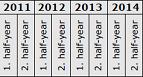 | |||||||||
| Recommendation 1. National Open Access policy is established by the Ministry of Science, Technology and Innovation | |||||||||
|
Process
|
1. The Open Access Committee submits a proposal for national Open Access policy to the Ministry of Science, Technology and Innovation and the Ministry of Culture |
x | |||||||
|
2. The Ministry of Science, Technology and Innovation is responsible for necessary hearing and decision |
x | ||||||||
|
Recommendation 2. Research councils and foundations establish Open Access policies | |||||||||
|
Process
|
1. Research councils and foundations establish and implement Open Access policy |
x | |||||||
|
Recommendation 3. Universities and other research institutions establish Open Access policies | |||||||||
| Process |
1. Discussion and decision by the universities |
x | x | ||||||
|
Recommendation 4. The bibliometric research indicator should be coordinated with the national Open Access policy | |||||||||
|
Process
|
1. The Danish Agency for Research and Innovation considers how the indicator can be coordinated with the national Open Access policy |
x | x | ||||||
|
Recommendation 5. Establishment of common Internet access to Danish research results | |||||||||
|
Process
|
1. The Ministry of Science, Technology and Innovation and the Danish Agency for Research and Innovation implement the necessary demands in research grants |
x | |||||||
|
2. DEFF and the Open Access Committee prepare a proposal for a common portal which can also facilitate the interaction with national long-term preservation services |
x | ||||||||
|
3. A common portal is established and starts operating |
x | x | |||||||
|
Recommendation 6. Danish scientific publishers prepare discussion paper on transition to Open Access | |||||||||
|
Process
|
1. The Open Access Committee prepares mandate |
x | |||||||
|
2. The Danish Publishers Association is invited to put forward proposals on the basis of the mandate |
x | ||||||||
|
3. The Danish Publishers Association submits proposals as to how Danish periodicals and monographs can be converted to Open Access |
x | ||||||||
|
Recommendation 7. DEFF coordinates the implementation of the recommendations by the Open Access Committee | |||||||||
|
Process
|
1. DEFF is made responsible for the practical project management of the Open Access Committee’s recommendations as well as the central support to the universities’ local advisers in the field of copyright and Open Access |
x | x | x | x | x | x | x | x |
|
Recommendation 8. Professional implementation of information, debate and dialogue | |||||||||
|
Process
|
1. Agreement is entered into with a media and communication bureau |
x | |||||||
|
2. Campaign is launched |
x | x | x | x | x | x | x | ||
|
Recommendation 9. Coordination of the Danish Open Access initiative in international fora | |||||||||
|
Process
|
1. The recommendation is implemented by The Danish Council for Independent Research, The Danish Council for Strategic Research, Danish National Research Foundation, the Danish National Advanced Technology Foundation and the Danish Council for Technology and Innovation |
x | x | ||||||
|
Recommendation 10. Increased focus on Open Access in DEFF consortia licenses | |||||||||
|
Process
|
1. DEFF prepares a plan for Open Access activities within the license area |
x | |||||||
|
2. The plan is approved by the Open Access Committee |
x | ||||||||
|
3. The plan is put into motion |
x | x | x | x | x | x | x | x | |
|
Recommendation 11. Danish membership of Confederation of Open Access Repositories | |||||||||
|
Process
|
1. DEFF becomes a member on behalf of the Danish repositories |
x | |||||||
|
2. DEFF ensures that activities and results are widely anchored |
x | x | x | x | x | x | x | ||
|
Recommendation 12. Establishment of comprehensive long-term preservation service for the universities’ publications | |||||||||
|
Process
|
1. DEFF and the Open Access Committee prepare a proposal for the long-term preservation service’s comprehensive functionality and interaction with the common portal and the universities’ repositories |
x | |||||||
|
2. The long-term preservation service is developed |
x | ||||||||
|
3. The service is launched |
x | ||||||||
|
Recommendation 13. National planning of free access to as well as long-term preservation of primary research data | |||||||||
|
Process
|
1. The Ministry of Science, Technology and Innovation and the Ministry of Culture prepare mandate for cooperation organisation on the basis of discussion paper from the Open Access Committee |
x | |||||||
|
2. The Ministry of Science, Technology and Innovation appoints interdisciplinary cooperation organisation |
x | ||||||||
|
3. Phase 1 starts |
x | x | |||||||
|
4. Phase 2 starts |
x | x | |||||||
|
5. The cooperation organisation submits discussion paper concerning how Danish research data can be archived and long-term preserved |
x | ||||||||
|
Recommendation 14. Danish membership of central international cooperation fora for handling and long-term preservation of scientific information in the broader sense | |||||||||
|
Process
|
1. DEFF becomes a member |
x | |||||||
|
2. DEFF ensures that activities and results are widely anchored |
x | x | x | x | x | x | x | ||
1 Access – The weak link in the value chain of research: Jakob Heide Petersen. DF Revy, no. 7, November 2009, p. 7.
2 Green Open Access refers to parallel publishing in a repository. Golden Open Access refers to periodicals where one pays a lump sum for publishing an article, which then via the periodical becomes available online.
Source: https://www.open-access.dk
3 Council of the European Union; Council conclusions on scientific information in the digital age: access, dissemination and preservation. URL: http://www.consilium.europa.eu/ueDocs/newsWord/en/intm/97236.doc (see also appendix 2)
4 Mandate for the national work with Open Access; URL: http://www.deff.dk/content.aspx?catguid=(432C8A5B-1EFC-47A5-8378-0339EAED4267%7d
5 Berlin Declaration on Open Access to Knowledge in the Sciences and Humanities. URL: http://oa.mpg.de/openaccess-berlin/berlindeclaration.html
6 A repository is an archive for research publications and research data (often without the necessary technique for long-term preservation)
7 The immediate practical implication of the Houghton Report: Provide Green Open Access now/ Harnard Steven. Preprint of article submitted for consideration in the Prometheus. http://www.informaworld.com/smpp/
8 Costs and benefits of Alternative Publishing Models: Denmark / Professor John Houghton, Centre for Strategic Economic Studies, Victoria University, Melbourne. Kilde: http://www.deff.dk/content.aspx?catguid={79A0643A-7E30-417A-A184-18F422A6B86C%7d
9 Source: http://www.fi.dk/forskning/den-bibliometriske-forskningsindikator
10 Digital Repository Infrastructure Vision for European Research (DRIVER). DRIVER is financed of the EC and is a collaboration to build a network between repositories with freely available content. Source: http://www.driver-community.eu
11 Source: http://www.coar-repositories.org/
| Forrige | | Til sidens top |
This page is chapter 4 of 4 of the publication "Recommendations for implementation of Open Access in Denmark".
Publication may be found at the address http://www.bibliotekogmedier.dk/fileadmin/publikationer/publikationer_engelske/open_access_2010/index.htm
© 2010
